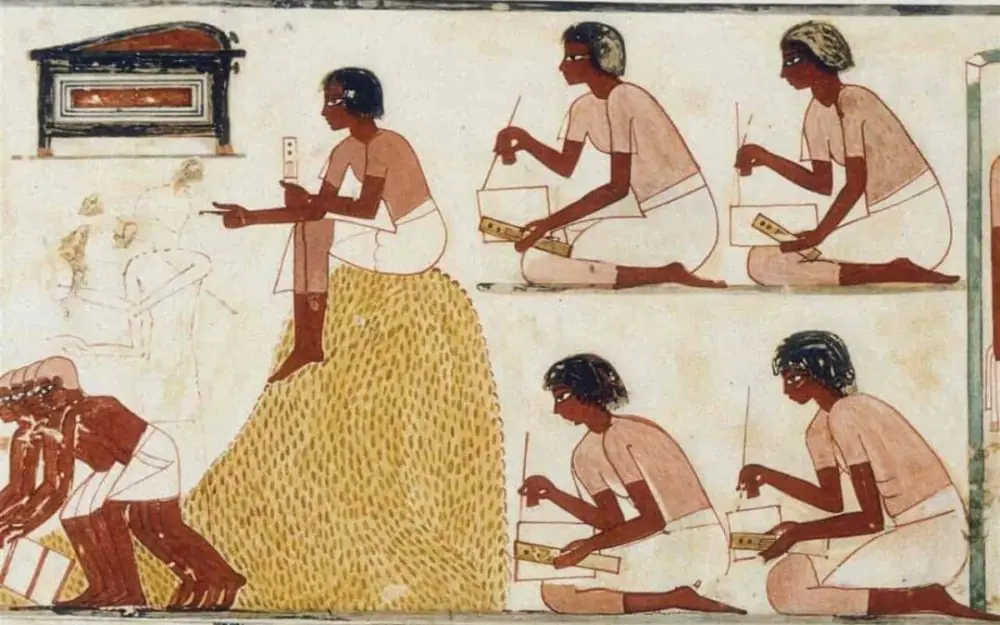
When we think about ancient Egypt, images of majestic pyramids and grand pharaohs often come to mind. But behind these monumental achievements were the scribes, the intellectuals of their time. So, what did scribes do in ancient Egypt?
They were more than just record-keepers. Instead, their roles were vital to the civilization’s success. Here are the top five fascinating, lesser-known facts about these ancient professionals.
What Did Scribes Do in Ancient Egypt?
Scribes in ancient Egypt were the backbone of administration and communication. Their work went far beyond writing. They played pivotal roles in various aspects of society, from religious rituals to economic management.
What did scribes do in ancient Egypt beyond mere documentation? They were custodians of sacred and scientific knowledge. Scribes meticulously copied religious texts, ensuring the preservation of essential spiritual knowledge across generations. Thus, their work required not only literacy. But it also demanded an understanding of complex religious concepts and rituals.
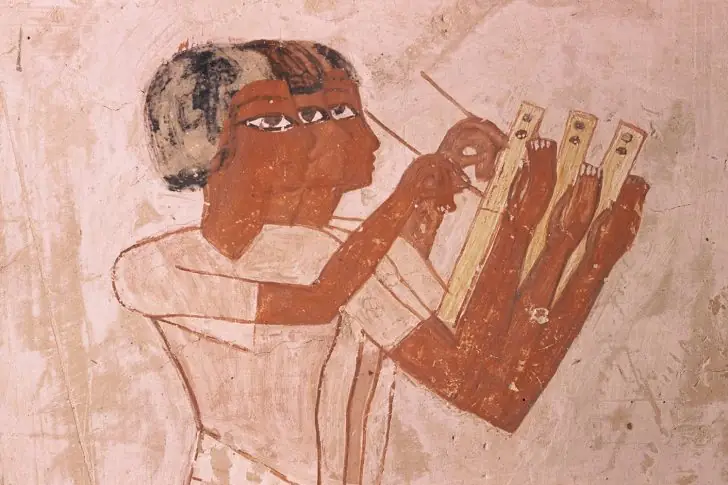
In temples, scribes recorded prayers, spells, and instructions for ceremonies. Their precise transcription of these texts was crucial, as any error could potentially offend the gods. This role made them integral to the spiritual and cultural life of ancient Egypt. Thus, maintaining the continuity of religious practices and beliefs.
Scribes Were Integral to Administration and Governance
Administrative duties were a significant part of what scribes did in ancient Egypt. They kept detailed records of taxes, census data, and land ownership. Their work ensured the smooth functioning of the economy and the overall governance. Without their diligent record-keeping, the bureaucracy that held the state together would have crumbled.
Scribes documented everything from legal contracts to state decrees. Thus, effectively serving as the communication bridge between the rulers and the people. Their records helped manage resources, plan construction projects, and implement policies.
Thus, this administrative expertise made them indispensable to the ruling class and critical to the stability of the country.
They Had a Pivotal Role in Education and Training
Another lesser-known aspect of what scribes did in ancient Egypt was their involvement in education. They trained future scribes in the art of writing and knowledge of literature, mathematics, and astronomy. Scribes worked in schools attached to temples or in palace workshops.
Here, they taught young apprentices the skills needed to succeed in their roles.
However, the curriculum for aspiring scribes included learning hieroglyphics, the complex system of writing used for religious and monumental texts, and hieratic – a cursive script for everyday use.
They Acted as Legal Experts and Advisors
Scribes in ancient Egypt often served as legal experts. They were involved in drafting legal documents, including wills, marriage contracts, and agreements. Their extensive knowledge of the law made them valuable advisors in legal matters, helping to resolve disputes and ensure justice.
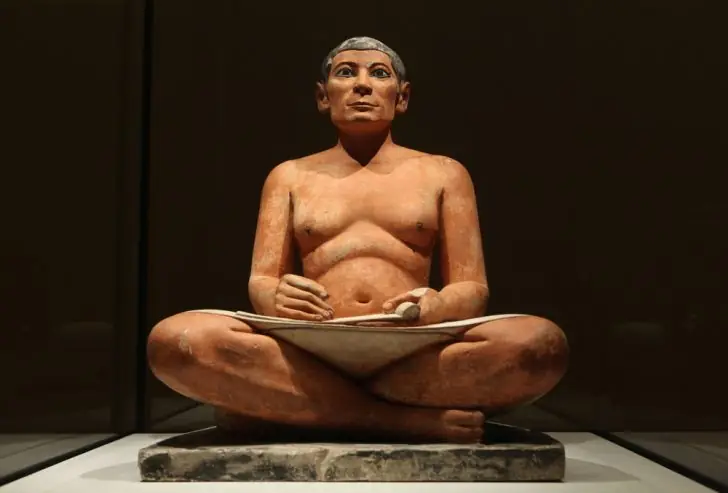
Their role in the legal system highlights their importance beyond mere clerical work. Instead, it showcased their influence in maintaining societal order and fairness.
They Were Directly Involved in Building Projects
An intriguing fact about what scribes did in ancient Egypt is their involvement in building projects. Scribes recorded the progress of construction, managed supplies, and kept inventories of materials. Their meticulous records ensured that projects stayed on schedule and within budget.
Apart from that, scribes documented the achievements of these projects, inscribing details on monuments and temples that have survived millennia. These records not only served practical purposes at the time. But they also provided future generations with insights into the architectural and engineering feats of ancient Egypt.