Nestled within the rugged Bodmin Moor in Cornwall, King Arthur’s Hall has intrigued historians and locals for centuries. A recent study by the Cornwall Archaeological Unit (CAU) revealed its origins date back to the Neolithic Period, approximately 5,000 to 5,500 years ago. This discovery places its construction in the same era as Stonehenge, disproving the previous belief that it was a medieval structure built around 1000 A.D.
King Arthur’s Hall: A Unique Neolithic Structure
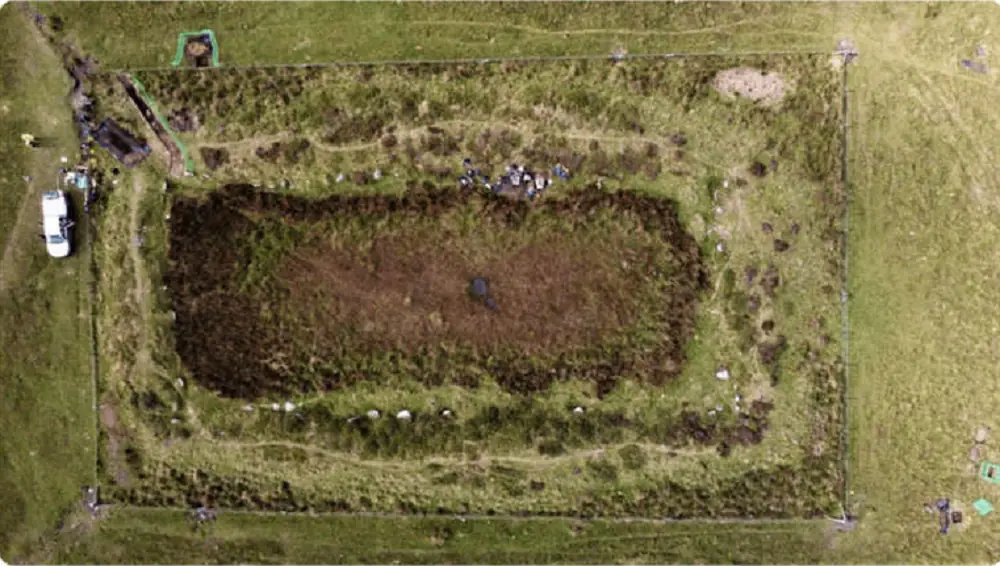
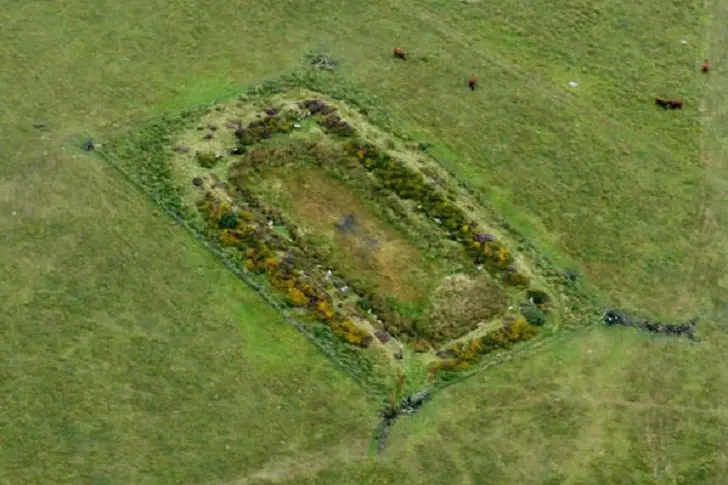
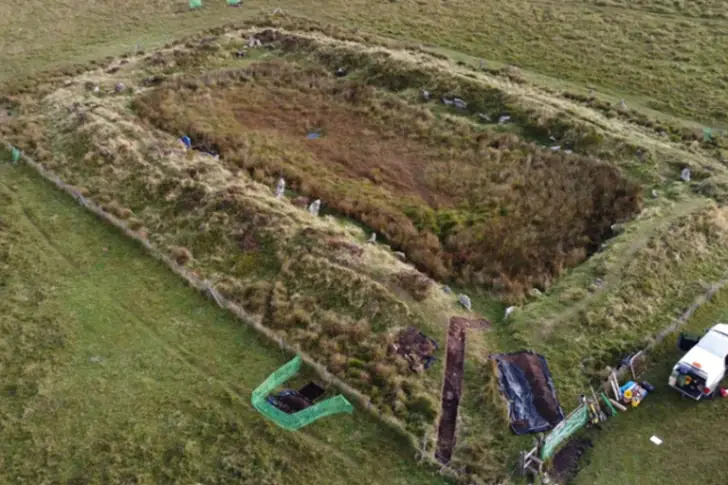
King Arthur’s Hall is a rectangular enclosure 155 feet long and 65 feet wide, surrounded by an earth-and-stone embankment. Lining the inner bank are 56 standing stones, or orthostats, some of which are still upright and reach heights of six feet. Many of these stones, however, now lie flat or lean precariously, with potentially more buried beneath the surface.
The layout is unique, with its rectangular form differing from the circular arrangements typically associated with Neolithic sites. Its north-south orientation and distinctive features have long puzzled researchers. Although the structure was once thought to be a medieval livestock enclosure, its precise design and the use of standing stones hinted at a much older origin. The new findings confirm these suspicions, rewriting its place in history.
Dating the Monument
The CAU analyzed soil samples from the embankment using advanced Optically Stimulated Luminescence (OSL) dating techniques. OSL measures the last time soil was exposed to light, providing an accurate construction date. The results revealed that the embankment was built during the late 4th millennium B.C., firmly establishing its Neolithic origins.
Additional tests, including radiocarbon dating of organic materials, showed evidence of activity at the site during later prehistoric and medieval periods. Infilling of the enclosure began roughly 2,000 to 2,500 years ago, and the site was repurposed in medieval times, potentially as a livestock pound or reservoir for tin mining. These findings highlight the structure’s long history of use and adaptation.
The Role of King Arthur’s Hall in Neolithic Life
The true purpose of King Arthur’s Hall remains a mystery. Its construction, featuring an embanked rectangular layout with stone lining, has no known parallels in Neolithic architecture. Standing stones and a possibly marshy interior suggest it could have been a sacred site. Archaeologists speculate it may have been used for rituals, gatherings, or ceremonies, although its exact role in Neolithic society is unclear.
During the medieval period, the site took on more practical functions. Cornwall’s reliance on agriculture and mining aligns with the theory that the enclosure served as a livestock pond or reservoir. These later uses add layers to its historical narrative, reflecting the evolving needs of the surrounding community.
Challenges in Preservation
Despite its historical significance, King Arthur’s Hall faces numerous preservation challenges. Erosion from human visitors, grazing cattle, and overgrown vegetation have put the site at risk. Historic England has listed it on its Heritage at Risk Register, underscoring the need for immediate conservation efforts.
Plans are underway to develop a management strategy that will safeguard the site for future generations. This includes repairing damaged fencing to prevent further erosion and limiting access to particularly vulnerable areas. The confirmation of its Neolithic origins has reignited interest in preserving this extraordinary monument, ensuring it remains a valuable cultural landmark.
Through these efforts, King Arthur’s Hall can transition from a mystery site to a celebrated piece of Britain’s ancient history, offering insights into life thousands of years ago.