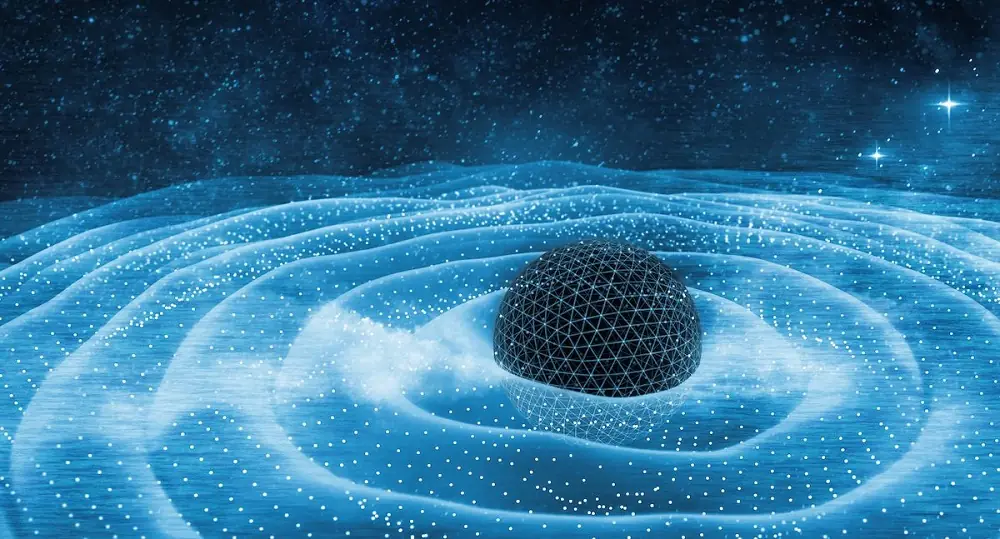
Gravitational waves are ripples in the fabric of space-time caused by the acceleration of massive objects. Detecting these waves has been a significant achievement in astrophysics, providing new insights into the fundamental nature of the universe. Among these detections is the recent discovery of low-frequency gravitational waves, which has opened up new avenues of research in this exciting field.
Below, we will explore the importance of detecting gravitational waves, Einstein’s Theory of General Relativity, low-frequency gravitational waves, the NANOGrav Telescope Array, pulsar observations, and the implications of gravitational wave detection.
Einstein’s Theory of General Relativity
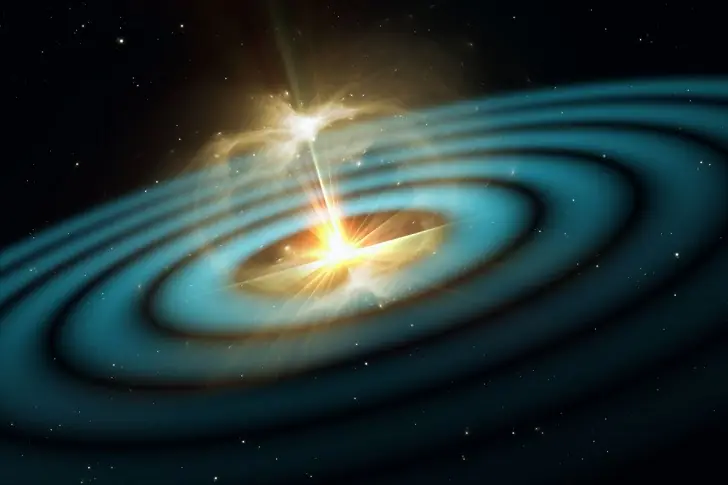
Albert Einstein’s Theory of General Relativity describes how gravity works by postulating that massive objects affect the space-time around them. This theory predicted that the acceleration of massive objects would cause ripples in space-time, known as gravitational waves.
These waves travel at the speed of light, and the strength of the waves decreases as we move away from the source. While gravitational waves are fragile, the detection of these waves has been essential in expanding our understanding of the universe.
Low-Frequency Gravitational Waves
Low-frequency gravitational waves are a recent discovery that has opened up new avenues of research in this field. Low-frequency waves have longer wavelengths than their high-frequency counterparts and have a lower frequency, ranging from minutes to years.
The recent detection of low-frequency waves came from observations of millisecond pulsars by the NANOGrav Telescope Array. The NANOGrav Telescope Array is a group of radio telescopes that use pulsars to detect gravitational waves.
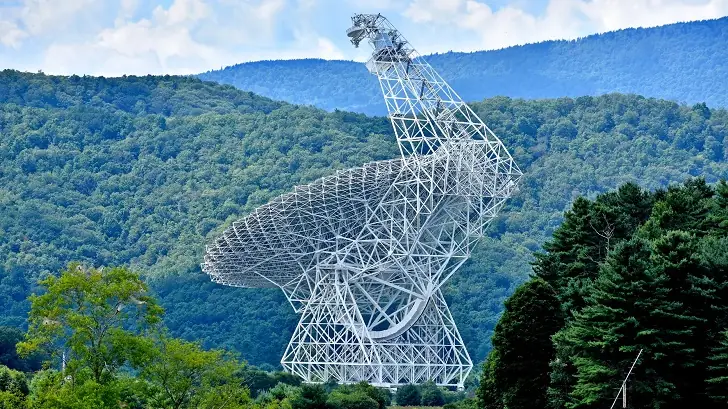
NANOGrav Telescope Array and Pulsar Observations
Pulsars are highly magnetized and rapidly spinning neutron stars emitting regular radiation pulses. Scientists can detect deviations in their arrival times by faithfully tracking these pulses.
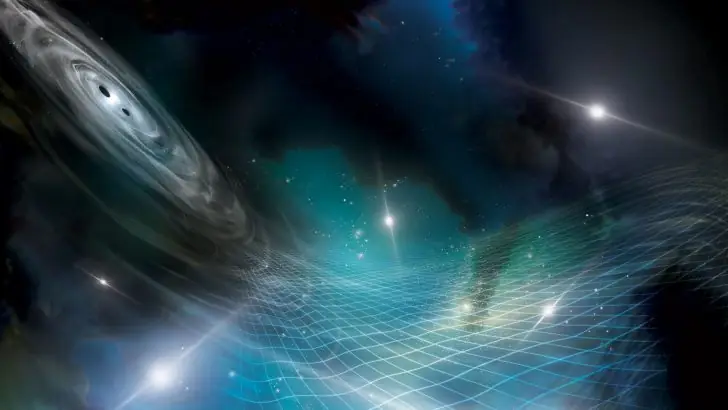
Gravitational waves passing through space-time can cause ripples in the pulses, leading to minute differences in the arrival times of the radio waves. Using this method, scientists could detect low-frequency gravitational waves from a merger of supermassive black holes.
Implications of Gravitational Wave Detection
The detection of low-frequency gravitational waves is a significant accomplishment in astrophysics. These waves can provide new insights into black holes and galaxy evolution, dark matter, and cosmic inflation. Gravitational waves can also help scientists uncover the hidden properties of the universe, revealing new dimensions and the fundamental nature of space-time.
Conclusion
The detection of low-frequency gravitational waves has opened up new avenues of research and shed light on the fundamental nature of the universe. Detecting these waves is important because they provide new insights into black holes, galaxy evolution, dark matter, and cosmic inflation.
The recent discovery of low-frequency waves using the NANOGrav Telescope Array and pulsar observations is a significant achievement in astrophysics, and it opens up new possibilities for future research directions. The field of gravitational wave detection is an exciting and rapidly evolving field, and the detection of low-frequency gravitational waves marks a significant milestone in this journey.